
In Omaha, the roof over your warehouse works hardest in the months you think about it least. Once the first hard freeze arrives, a small, fixable problem — a pooled puddle, a lifted seam, a clogged drain — turns into an expensive emergency. Freeze-thaw cycles pry open weak spots, snow load presses down on ponding water, and ice backs up at every drain and scupper. The best time to catch all of that is now, before the cold sets in.
Whether you own a distribution center off I-80 or a mid-size storage facility in the metro, here are five warning signs that your warehouse roofing in Omaha needs professional attention before winter, and why waiting until spring is the costliest choice you can make.
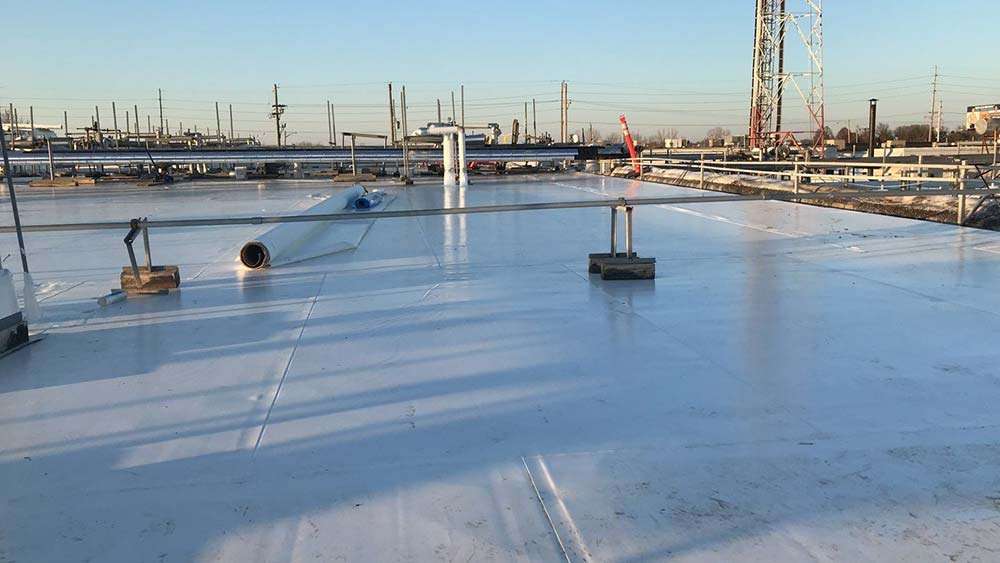
Low-slope warehouse roofs are designed to shed water quickly. If you see puddles that linger more than 48 hours after a rainstorm — what the industry calls ponding, that flat spot is a red flag. Ponding water accelerates membrane aging, adds hundreds of pounds of dead weight, and, once it freezes, expands into seams and flashings that were perfectly sound in July. Dark rings or a chalky residue on the membrane are telltale signs of where water sits.
The seams are where most commercial roofs fail first. Walk the roof (or have a professional do it) and look for bubbles, ripples, or spots where the membrane has pulled away from the deck or lifted at a seam. On an aging or improperly welded roof, winter wind and contraction will peel those seams open and drive meltwater straight into your insulation, and eventually, onto your inventory.
The seams are where most commercial roofs fail first. Walk the roof (or have a professional do it) and look for bubbles, ripples, or spots where the membrane has pulled away from the deck or lifted at a seam. On an aging or improperly welded roof, winter wind and contraction will peel those seams open and drive meltwater straight into your insulation and, eventually, onto your inventory.
Every drain, scupper, and internal downspout is a place where fall leaves, debris, and the first wet snow collect. A blocked drain turns a normal snowmelt into a pond, and a pond that refreezes overnight becomes an ice dam that forces water sideways under the membrane. Clearing and inspecting drainage before winter is one of the simplest, highest-return steps you can take to protect a warehouse roof.
If your roof is pushing 15–20 years, your warranty has lapsed, or the surface is a quilt of mismatched patches from previous fixes, winter is not the season to gamble. Aging membranes lose flexibility exactly when the temperature drops, and cold makes them brittle and prone to cracking. A pre-winter inspection tells you whether you’re looking at targeted repairs or planning for a re-roof, while you still have time to decide on your terms, not during a January leak.
Omaha roofs face a punishing cycle: warm days, freezing nights, wet snow, and gusting wind, over and over. Each freeze-thaw cycle works moisture deeper into any weak point, and heavy snow load magnifies every problem underneath it.
Small issues addressed in the fall are usually a same-day repair. The same issues discovered in February, behind ice, in sub-zero temperatures, with product on the floor below, mean emergency service, interior damage, and downtime you didn’t budget for.
Ciaccio Roofing is the largest Duro-Last® contractor in Nebraska and a trusted name in commercial and warehouse roofing across the Omaha metro. Our team will walk your roof, give you a clear, honest evaluation, and help you head into winter with confidence.
Call us for an inspection: 402-513-0740 | ciaccioroofing.com
Call us for an inspection: 402-513-0740